

Guide to Wheelchair Racing
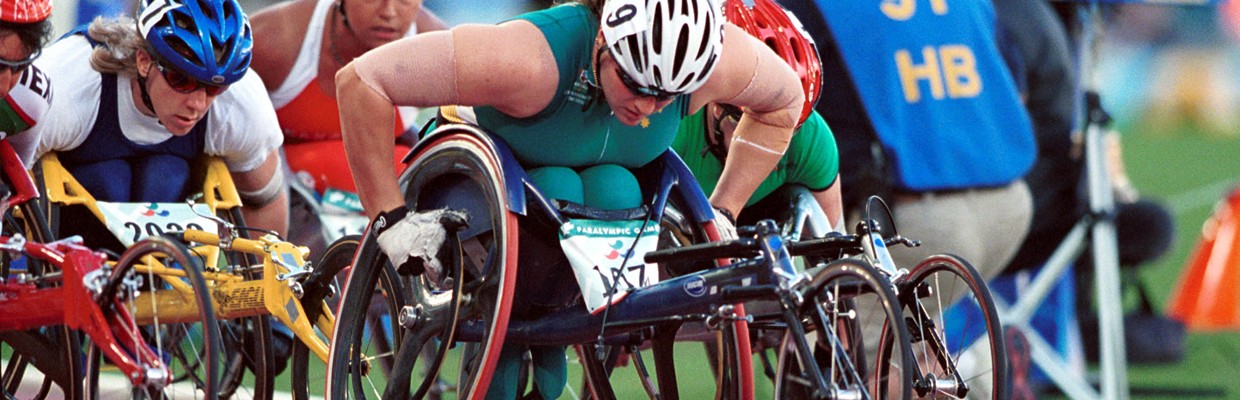
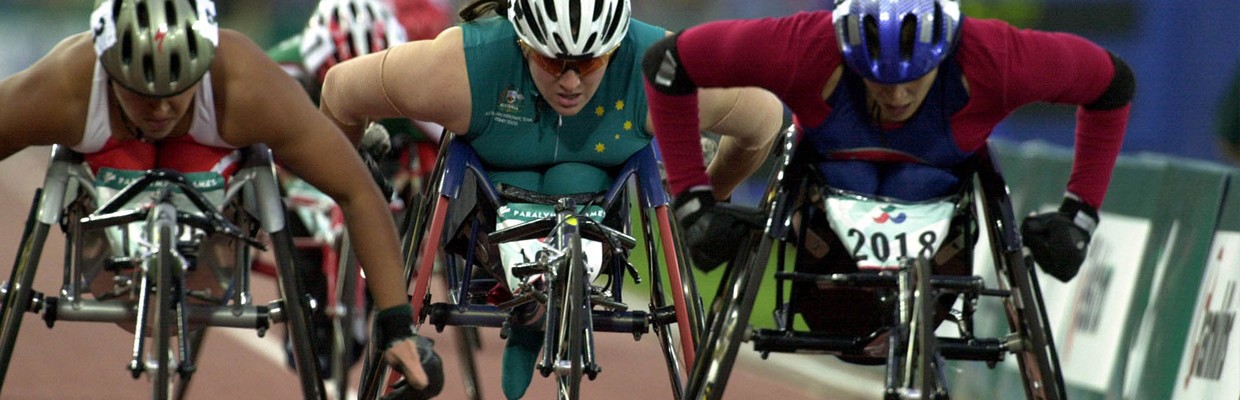
In 1960, the first Paralympic games were held in Rome. So much has changed ever since and currently, the entire sport is on a whole new level. Inspired by not just cycling but aeronautical engineering, wheelchair racing was a significant part of the World Paralympic Championships that took place from July 14- 23 in London.
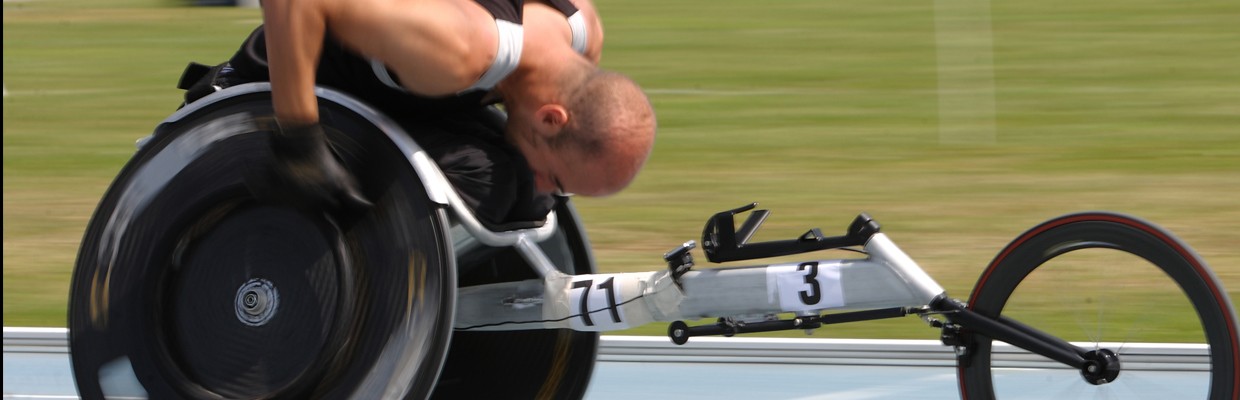
In designing them, the manufacturers make use of A7 aluminium which is aeroplane grade Aluminium. In addition to being remarkably thin, the metal is extremely lightweight. Use of composite metals also means everything was done with ‘weight loss’ in mind.
The cycling industry also inspired the creation of special carbon fibre wheels which of course dominated the London games.
Requirements for participation in Wheelchair Racing
At the World Paralympic Championships in London, T51, T52, T53, and T54 events required athletes to only compete using wheelchairs. And to participate one had to exhibit the following conditions: leg length difference, limb deficiency, muscular dystrophy, spinal chord injury, amputation, Bifida or just about any other musculoskeletal impairments as well as conditions that impair the range of one’s mobility.
Equipment for Disability Sports
Athletes such as Ben Rowlings or Hannah Cockroft have broken sports records and much of the credit goes to the technology installed in the equipment they use. Part of the modern technology includes the use of 3D printing to create numerous chair parts and gloves as well.
But how exactly is this technology applied?
Let’s check out.
Tailor-made to work with Athlete’s body
UK’s Invacare product manager heading top of the line disability sports equipment, Huw Roderick, remarks that there are specific wheelchairs that are customised around the athlete’s specific attributes.
The entire process takes into consideration the specific disability the athlete has and their sports category to ensure the designed wheelchair sufficiently meet’s the person’s ability.
Keep in mind that hard training often leads to unprecedented body changes and as a result, an athlete with disabilities can outgrow their wheelchair. Roderick says that the wheelchair design takes into account such possibilities.
Sitting posture
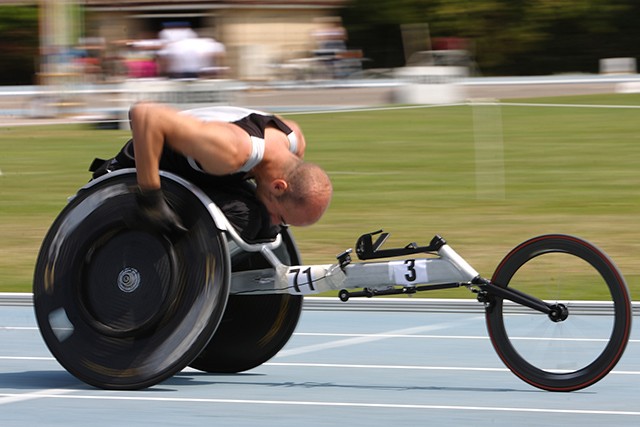
Normally, the athlete’s legs are supposed to be tucked beneath the Guide to wheelchair racing firmly to allow for aerodynamic movement. So in designing the chair, Roderick states that they take into consideration the nature of the athlete’s legs in order to ensure that the wheelchair accommodates their legs fittingly.
Unlike able-bodied people, the position a person with disabilities assumes is a difficult one since they are mostly in a kneeling position with their heads down, shoulders above the wheel hubs, and arms on the wheels. So Roderick says care must be taken to ensure the legs, thighs and calves don’t succumb to downward pressure.
Manufacturing and Shipment
These bespoke racing wheelchairs are usually built overseas and thereafter shipped back to the specialist dealers for the tweaking sessions. This is to ensure everything fits and works well. Transportation is often a major challenge due to the risk of damage involve but the specialist dealers such as Invacare know how to handle this better.
Racing wheelchair prices
In this Guide to wheelchair racing you will be set back thousands of pounds if you wish to own a bespoke racing wheelchair. According to the producers, it costs just as much to design and produce one. For instance, carbon fibre wheels can cost anywhere between £1,500 and £1,800 per pair. The chair itself costs an average of £ 5000. So this leaves the ownership of such equipment to only a select few. During the just ended Olympic Games in Rio, only two American athletes showed up with the wheelchairs.
Compatibility Issues
What mostly discourages many young people from trying out wheelchair racing is the difficult position they have to adopt in order to race. But thankfully, companies such as Invacare have designed racing wheelchairs that try to solve this complexity.
The wheelchair comprises an adjustable seat able to tilt backwards and forwards and it comes complete with foot pedals that let you dangle your feet vertically while holding them with straps just so that they don’t obstruct you.
If your lower body has very little muscle, you need to exercise a lot of care in order to avoid the risk of injuring your leg. Plenty of athletes hardly feel their legs so always stay conscious while applying pressure on them.
Other Facts About Racing Wheelchairs and Athletes
Equipment weight- the lightest racing wheelchair weights about 13lbs while the heaviest can weigh up to 22lbs.
Carrying Capacity – Most racing wheelchairs are designed to carry up to 250 lbs. Even the heaviest of men such as Mike Tyson or Antony Joshua can comfortably use the wheelchair (if they decide to)
Average training Distance – This might vary from athlete to athlete. For instance, 5000 miles is the distance Ben Rowlings covers in a year during his training. That’s half the distance from Australia to New York.