
Push effort, travel further
Power Assist for Da Vinci Wheelchairs
The Da Vinci wheelchair is a manual wheelchair commonly chosen by users who value efficiency, responsiveness, and long-term comfort.
Many people who use this chair eventually explore power assist as a way to reduce physical strain, extend how far they can travel, and make outdoor routes more manageable without giving up the control and feel of a manual wheelchair.
In many real-world setups, the Da Vinci wheelchair is power assist compatible with Da Vinci wheelchairs, provided it is correctly specified and assessed.
Users comparing similar active wheelchairs may also want to explore power assist options for the Ki Mobility Rogue
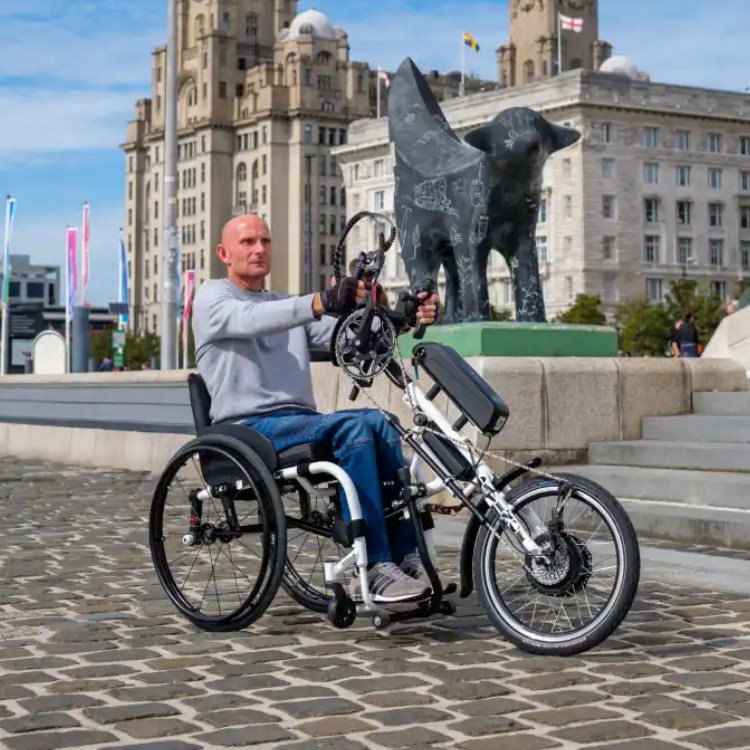
Power assist is not a one-size-fits-all solution. Even when a wheelchair model is widely used with power assist systems, final compatibility depends on how the chair is configured and how it is used day to day.
Axle position, wheel size, camber, frame geometry, user weight, posture, and typical environments all influence which power assist option will work best.
For this reason, the Da Vinci wheelchair should be considered commonly compatible rather than universally compatible.
Need help deciding what might work for you?
If you’d like personalised guidance based on your wheelchair setup or mobility needs,
a specialist from Invictus Active can help.
Need help deciding what might work for you?
If you’d like personalised guidance based on your wheelchair setup or mobility needs, a specialist from Invictus Active can help.
Power assist systems are designed to reduce the repetitive effort involved in pushing a wheelchair, particularly on longer journeys, inclines, ramps, or uneven ground.
For some users, the benefit is improved comfort and endurance. For others, it is about protecting shoulders, wrists, and elbows over the long term.
The right power assist should feel like a natural extension of your own propulsion, not something that overpowers the chair.
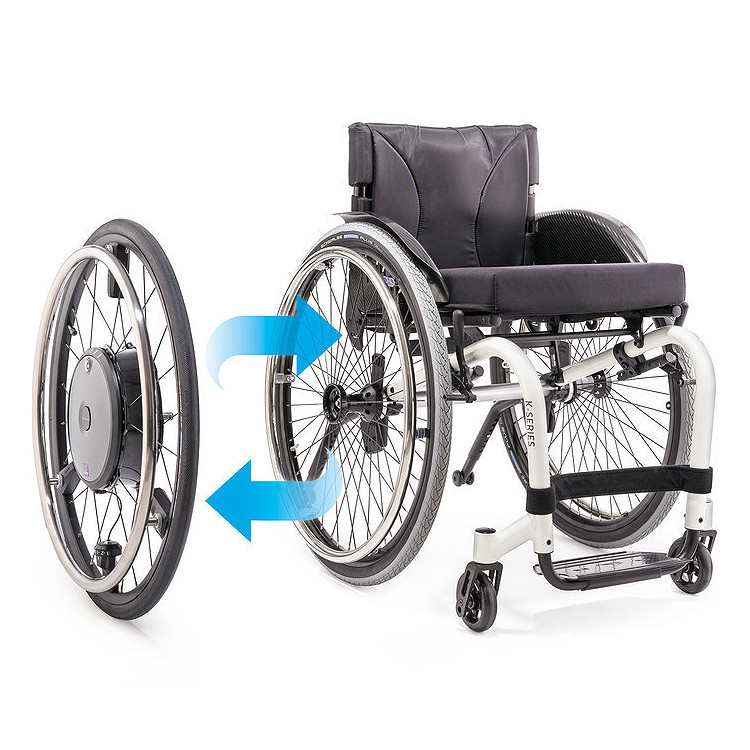
SmartDrive
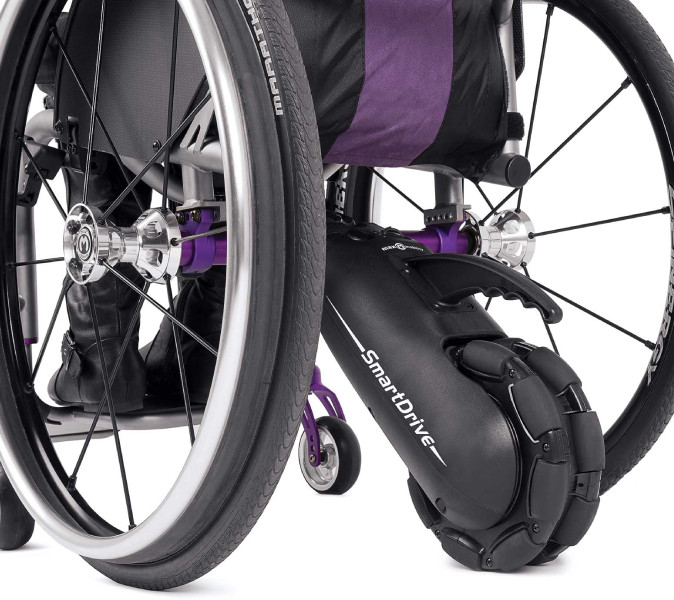
There are two broad styles of power assist: rear‑mounted drive units (which push the chair from behind), powered wheels (which replace the rear wheels), and front‑mounted traction units (which can be excellent outdoors).
Below is a practical breakdown of the most common options we’re asked about and what they’re best for.
Users considering this approach often compare it with setups used on the RGK Wheelchairs
Smoov
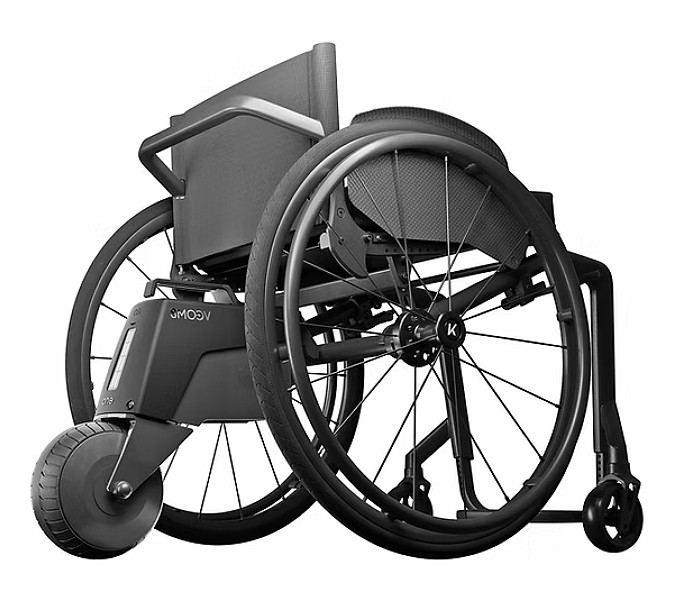
Smoov is another rear-mounted power assist system designed to provide smooth, push-activated support. It is frequently selected by users who want occasional assistance rather than constant power.
Smoov is often valued for its compact size and ease of removal, making it suitable for users who regularly load their wheelchair into a car.
Alber e-motion
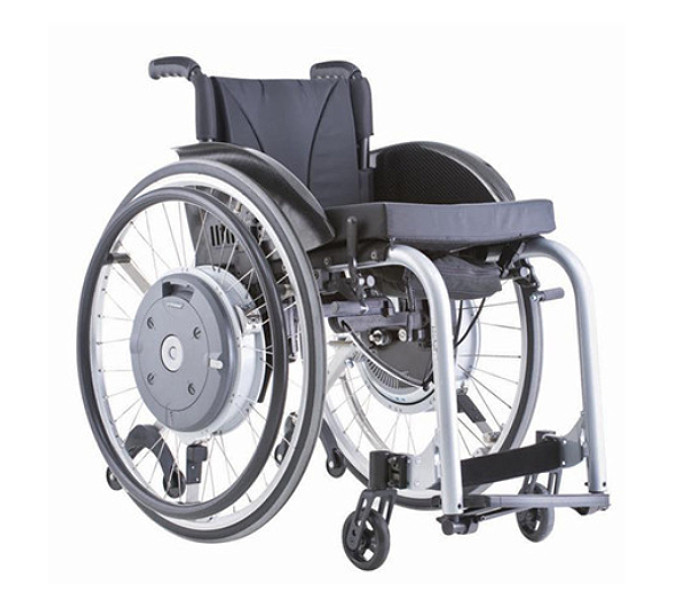
Alber e-motion powered wheels replace standard rear wheels and amplify push input through sensor-based assistance. This approach allows users to maintain a familiar propulsion style while benefiting from additional support.
Powered wheels are often considered by users who want symmetrical assistance and consistent support across longer distances. Weight, axle compatibility, and transport considerations are all reviewed during assessment.
Empulse
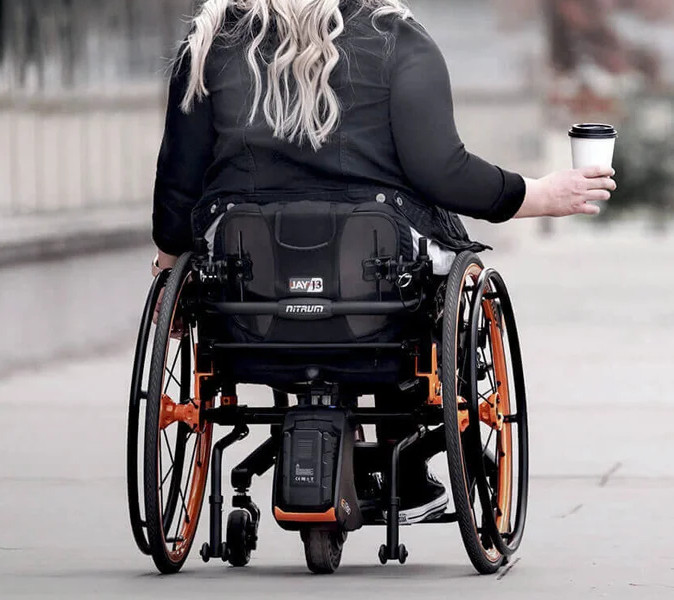
Empulse power assist systems are typically discussed when users want discreet assistance that integrates smoothly into daily routines.
These systems can provide meaningful support without significantly altering the look or handling of the wheelchair.
Empulse options are assessed based on balance, added weight, and ease of use.
Triride and PAWS
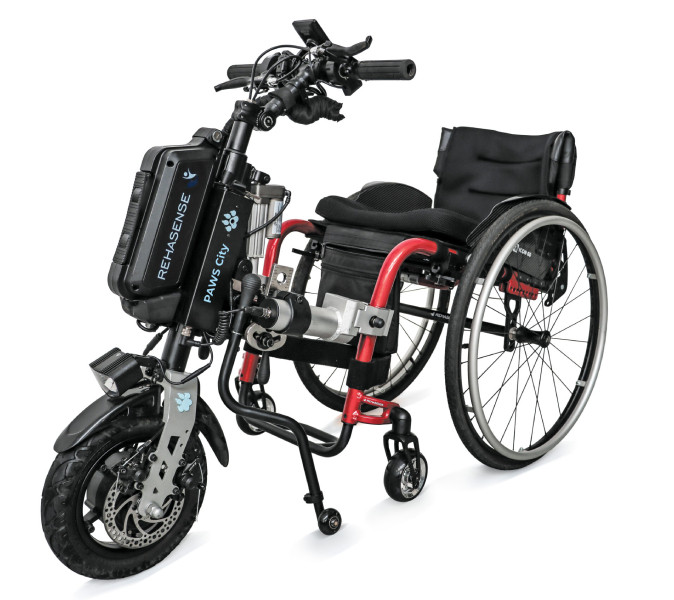
Triride and PAWS are front-mounted power assist systems primarily used for outdoor performance. They are often assessed for users who regularly encounter hills, uneven terrain, or longer outdoor routes.
Because these systems attach at the front of the wheelchair, careful consideration is given to steering behaviour, clearance, stability, and how the unit fits into the user’s daily routine.
What affects compatibility
Even with the same wheelchair model, two setups can behave very differently once power assist is added. Assessment typically considers axle position, wheel size and camber, seat height, centre of gravity, tyre choice, user weight, strength, and posture.
This process helps confirm that the Da Vinci wheelchair is power assist compatible with Da Vinci wheelchairs in practice, not just in theory.
Why assessment is important
An assessment ensures that the chosen power assist system is not only compatible but also safe, comfortable, and genuinely useful. Correct specification supports stable handling, predictable braking, good battery performance, and long-term reliability.
In short, while the Da Vinci wheelchair is commonly power assist compatible with Da Vinci wheelchairs, personal circumstances ultimately determine the best solution.
Related models include the Ki Mobility Rogue and RGK Wheelchairs.
Need help deciding what might work for you?
If you’d like personalised guidance based on your wheelchair setup or mobility needs,
a specialist from Invictus Active can help.
Need help deciding what might work for you?
If you’d like personalised guidance based on your wheelchair setup or mobility needs, a specialist from Invictus Active can help.
Is the Da Vinci wheelchair compatible with power assist?
Yes, when correctly specified and assessed.
Will power assist change how the wheelchair feels?
It may slightly affect handling, which is why setup and assessment matter.
Do I need an assessment before choosing power assist?
An assessment is strongly recommended.